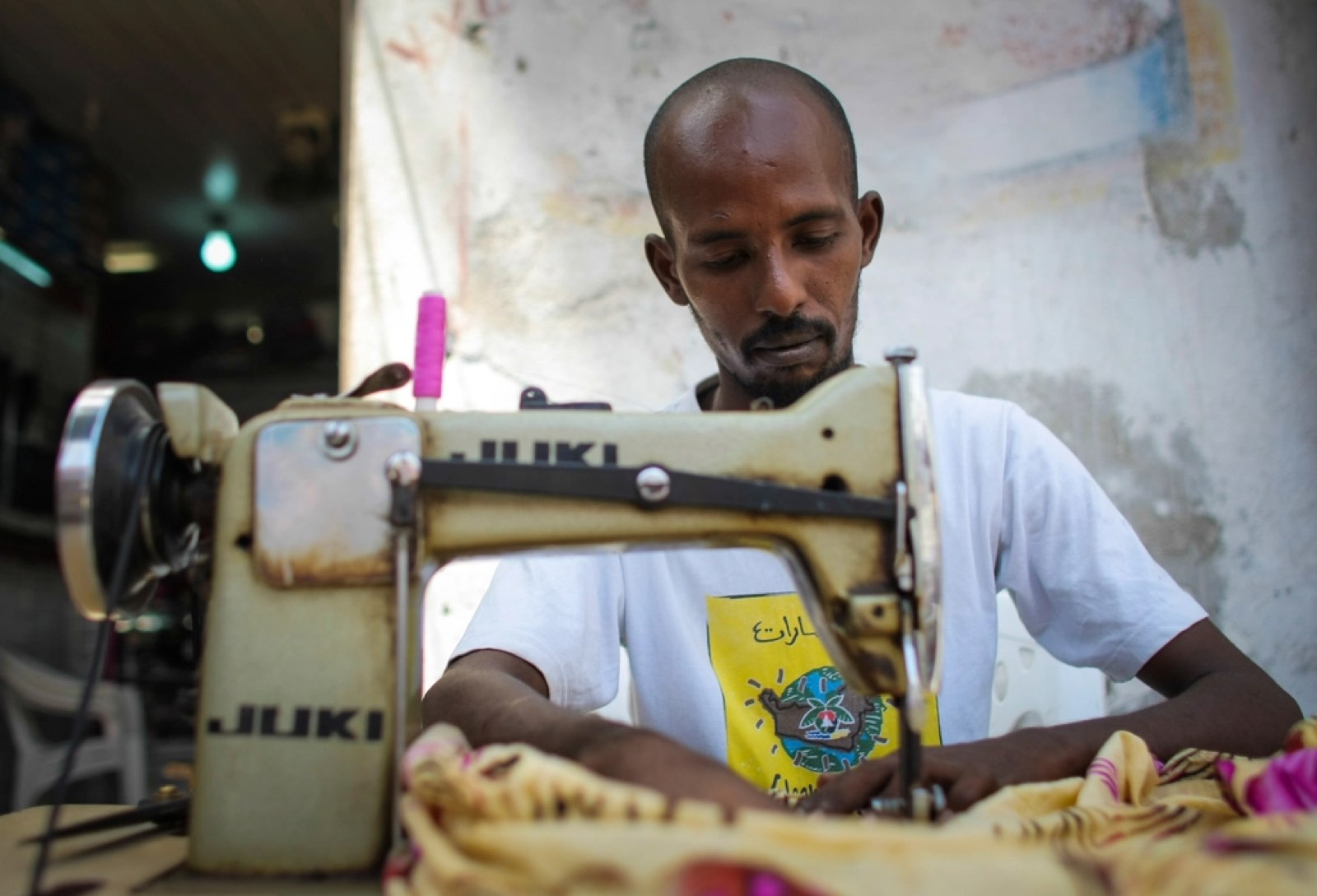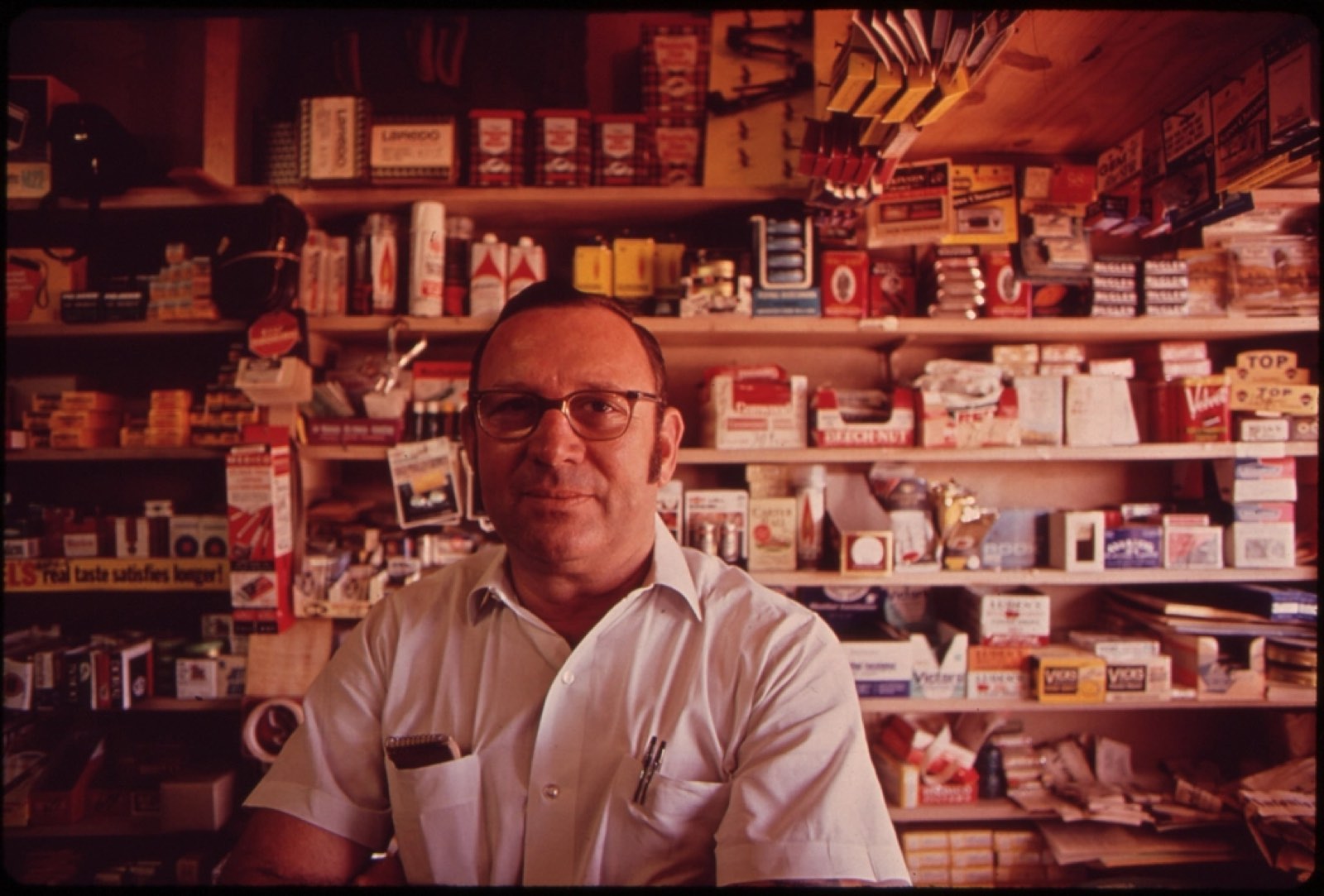
Business schools tend to teach lessons in one direction: from large companies to small ones. Here is how a multinational runs its supply chain; here is how a global brand thinks about customers. There is value in that. But anyone who has spent time with the owner of a good corner shop knows the lessons can run the other way too.
Small firms are not a curiosity. They are 90%1 of businesses worldwide, and in emerging economies they can produce up to 40%2 of GDP. In India, micro, small and medium enterprises accounted for 30.1%3 of GDP in 2022-23. The ways they operate, often under tight constraints, have been tested at enormous scale by an enormous number of people.
of GDP in emerging economies can come from small and medium enterprises.
In emerging economies, small and medium firms can account for a large share of national output.
World Bank, 2024Lesson one: know your customers by name
A good shopkeeper knows who buys what, who is likely to pay late, whose child has just started school and who will want the new stock first. Very little of this is written down. It lives in memory and conversation.
Large companies spend heavily trying to recreate this knowledge with data. They often end up with more information and less understanding. The lesson from the corner shop is not to collect everything. It is to remember the things that help you serve a person well, and to use them in a way that person would welcome.
The corner shop knows its customers without a dashboard. Many large firms have the dashboard and not the knowing.

Lesson two: spend only on what is used
A small business owner looks hard at every recurring cost. If a subscription is not earning its keep, it goes. Large organisations, by contrast, often carry software licences for staff who have left, modules nobody opened and tools adopted by one team and forgotten by the next.
The corner-shop instinct is a good one: pay for what you use, and check regularly that you are still using it. It sounds obvious. It is surprisingly hard to practise inside a large organisation, where costs are spread across budgets and nobody owns the whole bill.
Lesson three: one person can see the whole business
In a small firm, the owner can see everything: stock, cash, customers, staff. That view is what lets them make fast, sensible decisions, often standing at the counter. In a large firm the whole picture is split across departments and systems, and assembling it can take a team and a quarter.
Complete visibility is harder at scale, but the aim is right. The closer a company can get to one place where the people responsible can see what is happening, the better its decisions tend to be, and the sooner it notices when something is going wrong.
Part of the problem is the number of systems. When customers live in one tool, stock in another, staff in a third and money in a fourth, nobody sees the whole unless someone builds a report that stitches them together. Fewer, better-connected systems are not merely cheaper to run. They make the whole business easier to understand, which is the point of having systems in the first place.
Lesson four: trust is local and personal
Corner shops extend credit to customers they know. Customers trust the shop to be honest about weight, price and quality. That trust is built slowly, one transaction at a time, and it can be lost in an afternoon.
Large companies talk about trust in terms of brand. But customers experience it locally: in whether a bill is clear, whether a promise is kept, whether a complaint reaches someone who can actually help. The mechanics are the same as in the corner shop, only much harder to keep consistent across thousands of staff.
Trust is built one honest transaction at a time, whatever the size of the firm.

Lesson five: stay close to the till
The corner-shop owner is never far from the money. They see what sells, what does not and what customers ask for that is not on the shelf. Decisions follow quickly from what they notice. In a large organisation, the people making decisions are often many steps away from any customer, working from reports that are weeks old by the time they arrive.
Large organisations cannot put every manager behind a counter. They can shorten the distance, though. Letting the people who serve customers see the same information as the people who plan for them, and letting decisions be made closer to the work, recovers some of the corner shop’s speed. It also tends to make work more satisfying for the people doing it.
What this means for how we build
Svayam Incarnation Limited builds Intersink for businesses of every size, but we deliberately start from the small firm’s point of view. We think the corner shop’s instincts make better software for everyone, including organisations far larger than a corner shop.
So channels start empty and install only the apps they need. Every app is priced per channel per month and billed after the month is used, so the bill shows what was actually used. Each business has one bill that lists every channel and every app. Owners can see all their businesses from one sign-in. Roles and an audit log give larger organisations the control they need without taking away the simplicity.
A large enterprise running on these principles would look a little more like a well-run corner shop: aware of what it pays for, clear with its customers and able to see itself whole. We think that would be no bad thing, for the enterprise or for the people it serves.
What this means for your business
- Review every recurring cost at least once a quarter, and cancel what nobody has used.
- Record the few things about each customer that genuinely help you serve them, and nothing you would be uncomfortable explaining.
- Aim for one place where you can see stock, cash, customers and staff together.
- Make your bills and prices easy to read. Clarity is where trust starts.
Sources
- World Bank (2024)90% of businesses worldwide are small and medium enterprises, and they provide more than half of all jobs.
- World Bank (2024)40% of GDP in emerging economies can come from small and medium enterprises.
- Ministry of MSME, Government of India, Annual Report 2024-25 (2024)30.1% of India's GDP came from micro, small and medium enterprises in 2022-23.
Arguments and opinions in this essay are the editorial team’s own. Forecasts are the named source’s, not ours.